

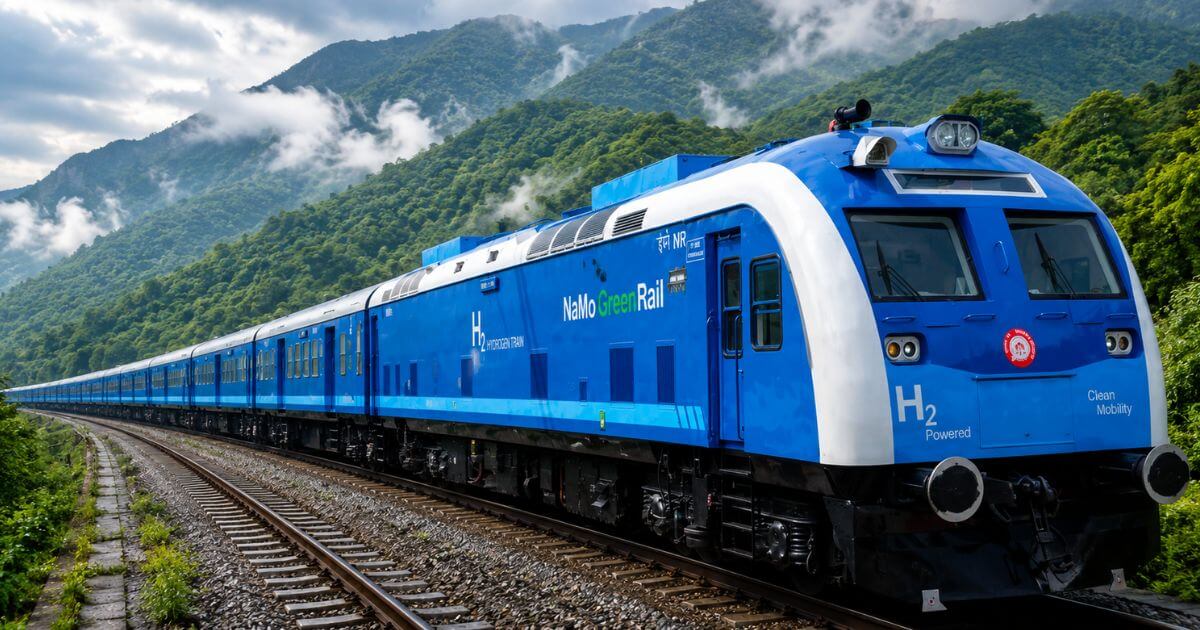
India has taken another significant step towards sustainable transportation with the successful rollout of its first hydrogen-powered train. Within just days of entering service, the train has crossed an important milestone by completing more than 1,200 kilometres of operations while saving over 3,200 litres of diesel. More importantly, instead of releasing harmful emissions, the train emits only water vapour, making it one of the country’s cleanest railway initiatives.
Developed entirely by Indian Railways using indigenous technology, the project reflects India’s growing focus on green mobility and energy-efficient transportation. Officials believe the hydrogen train will play a key role in reducing dependence on fossil fuels while paving the way for a cleaner future for the railway network.
India Enters The Hydrogen Rail Era
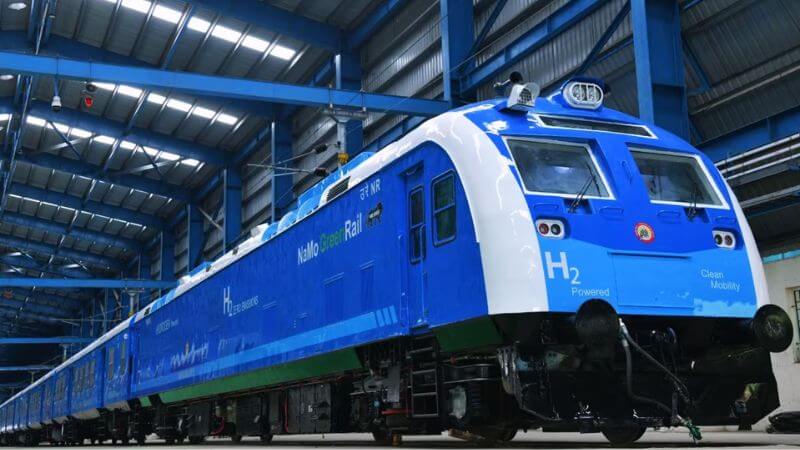
India’s first hydrogen-powered train was flagged off on July 17, 2026, and currently operates on the Jind-Sonipat route in Haryana. The launch marked the beginning of a new chapter for Indian Railways, which has been steadily exploring cleaner alternatives to conventional diesel-powered locomotives.
Unlike traditional trains that rely on diesel engines, this hydrogen-powered train generates electricity onboard through a fuel cell system. The technology combines hydrogen and oxygen in a controlled chemical reaction to produce electrical energy, which powers the train throughout its journey.
The biggest advantage of this process is its environmental impact. Instead of releasing smoke or carbon emissions, the only by-product produced is water vapour, making the train a zero-tailpipe-emission mode of transport.
More Than 1,200 Kilometres Completed Successfully
The project has already achieved an important operational milestone within a short period of its launch. According to Indian Railways, the hydrogen train has successfully completed over 1,200 kilometres of service during its initial operations. In the process, it has helped save more than 3,200 litres of diesel, highlighting the practical benefits of adopting alternative fuel technologies.
The successful performance during these early runs has strengthened confidence in hydrogen-powered rail transport and demonstrated that the technology can support regular passenger operations. Officials now see the project as a strong foundation for expanding hydrogen-powered railway services in the future.
Developed Entirely By Indian Railways
One of the most notable aspects of the project is that it has been designed and developed entirely in India under Indian Railways’ indigenous technology programme. The train consists of 10 coaches and is powered by two Hydrogen Driving Power Cars capable of producing a combined 2,400 kW of power.
To ensure efficient performance, the propulsion system combines hydrogen fuel cells with advanced Lithium Iron Phosphate (LiFePO₄) batteries, allowing the train to deliver reliable power while maintaining operational efficiency. The project also showcases India’s growing capabilities in designing and manufacturing advanced railway technologies without depending heavily on imported systems.
Dedicated Hydrogen Storage And Refuelling Facility
Running a hydrogen-powered train requires specialised infrastructure, and Indian Railways has established the country’s first dedicated hydrogen storage and refuelling facility at Jind. The facility has the capacity to store nearly 3,000 kilograms of green hydrogen, with storage pressures reaching up to 500 bar. The complete hydrogen ecosystem has been built following international safety standards to ensure secure handling, transportation, storage, and refuelling of hydrogen fuel. This dedicated infrastructure is considered a crucial step towards creating a larger hydrogen-powered railway network across the country.
Safety Remains A Top Priority
Since hydrogen is a highly combustible fuel, Indian Railways has incorporated multiple layers of safety into the project. The hydrogen train is equipped with independent systems capable of detecting hydrogen leaks, excessive heat, flames, and smoke. In addition, automatic shut-off mechanisms and continuous ventilation systems have been integrated to minimise risks and enhance passenger safety.
Officials have confirmed that these safety systems underwent extensive testing and validation before the train was cleared for commercial operations. The focus on safety has been one of the defining features of the project, ensuring that advanced technology is matched by robust operational standards.
Delhi Trials To Begin Soon
Following the successful completion of more than 1,200 kilometres on the Jind-Sonipat corridor, Indian Railways is preparing to take the project to its next phase. Officials have announced plans to begin trial runs on the Delhi route, which will further evaluate the train’s performance under different operating conditions. The expansion is expected to provide valuable operational data and support future deployment of hydrogen-powered trains across other railway routes in India. If the upcoming trials prove equally successful, hydrogen technology could become an important part of India’s long-term railway modernisation strategy.
A Major Step Towards Sustainable Transportation
The hydrogen train represents much more than a technological achievement. It aligns with India’s broader environmental goals of reducing carbon emissions, improving energy efficiency, and lowering dependence on fossil fuels. Railways remain one of the country’s largest transport networks, and introducing cleaner propulsion technologies could significantly reduce the sector’s environmental footprint over time. The successful launch also demonstrates how indigenous innovation can contribute to building sustainable public infrastructure while supporting India’s vision for cleaner transportation.
Conclusion
India’s first hydrogen-powered train has made an impressive start by completing more than 1,200 kilometres of successful operations and saving over 3,200 litres of diesel within days of its launch. Developed entirely by Indian Railways, the project combines homegrown engineering with environmentally friendly technology, offering a glimpse into the future of sustainable rail travel.
With dedicated hydrogen infrastructure already in place and Delhi trials expected to begin soon, the initiative marks an important milestone in India’s journey towards greener transportation. As the technology evolves and expands to more routes, hydrogen-powered trains could become a key pillar of the country’s next-generation railway network.
Follow Us: Facebook | Instagram | X |
Youtube | Pinterest | Google News |
Entertales is on YouTube; click here to subscribe for the latest videos and updates.