

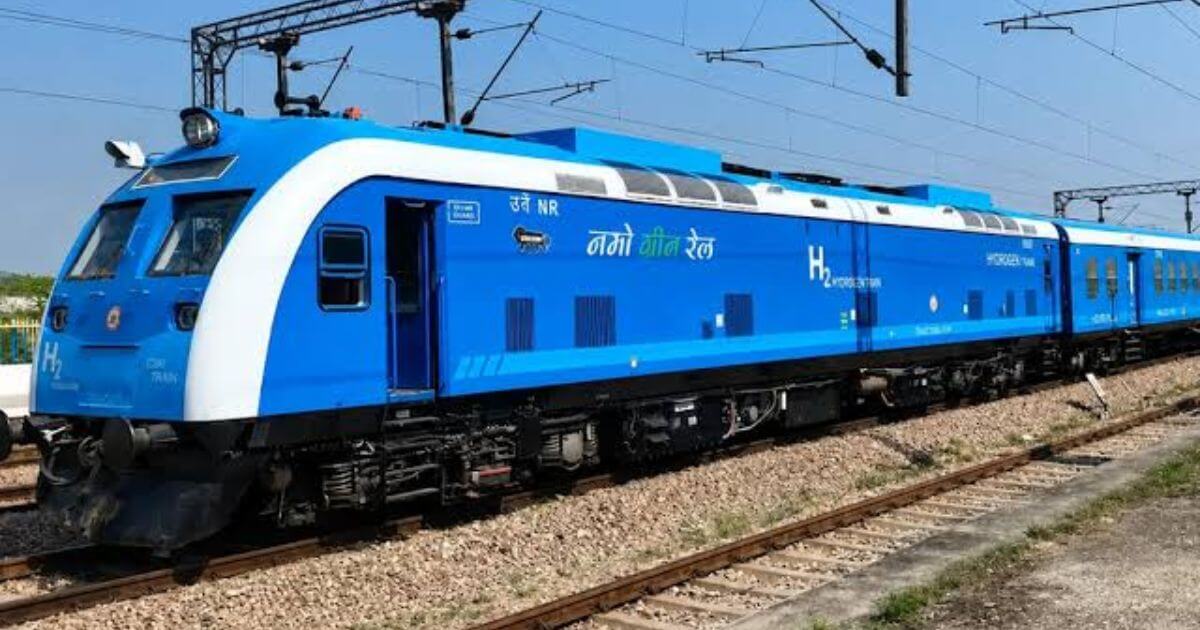
India has taken a significant step towards greener and more sustainable transportation with the launch of its first hydrogen-powered train. Prime Minister Narendra Modi flagged off the country’s maiden hydrogen fuel cell train, marking the beginning of a new chapter in Indian Railways’ journey towards clean energy. The train will operate on the 89-km Jind-Sonipat route in Haryana under the Northern Railway zone.
The project is more than just the launch of a new train. It serves as a pilot initiative that will test hydrogen fuel cell technology for future railway operations. With this move, India joins a select group of nations that are already exploring hydrogen-powered rail transport as an environmentally friendly alternative to conventional diesel trains.
The introduction of hydrogen technology reflects the country’s growing focus on reducing carbon emissions while modernising one of the world’s largest railway networks.
India’s First Hydrogen-Powered Train Begins Operations
From Jind tomorrow, India’s first hydrogen-powered train will be flagged off, which will connect Jind and Sonipat. India becomes one of the select group of nations that have such trains. This will go a long way in ensuring that India adopts clean technology in the railway sector.…
— Narendra Modi (@narendramodi) July 16, 2026
The newly launched train will become the first in India to use hydrogen fuel cell technology for propulsion. Unlike diesel-powered locomotives, hydrogen trains generate electricity through fuel cells by combining hydrogen with oxygen. The only by-products of this process are water and heat, making it a much cleaner mode of transportation.
The project also includes dedicated hydrogen storage infrastructure and refuelling facilities, ensuring smooth operation of the train during its pilot phase. Ahead of the launch, Prime Minister Narendra Modi shared his thoughts on X.
“India has become one of the select group of nations that have such trains. This will go a long way in ensuring that India adopts clean technology in the railway sector,” PM Modi posted.
The train has been developed as a demonstration project to evaluate the performance of hydrogen-powered technology under Indian operating conditions. If successful, it could pave the way for wider adoption across the country’s railway network in the coming years.
Haryana Route Chosen For The Pilot Project
The hydrogen-powered train will run on the 89-km railway line connecting Jind and Sonipat in Haryana. Apart from linking the two major stations, the train will also serve several towns and smaller railway stations along the route, improving connectivity for local passengers while testing the new technology in regular operations.
The proposed halts include Jind City, Pandu Pindara Junction, Lalit Khera Halt, Bhambhewa, Isapur Kheri Halt, Butana Halt, Khandrai Halt, Rabrah Halt, Lath Halt, Mohana, Barwasni Halt and Sonipat New before reaching Sonipat Junction. Choosing this route allows Indian Railways to evaluate the train’s efficiency, reliability, passenger response, and operational requirements before considering similar services elsewhere.
How Hydrogen Fuel Cell Technology Works
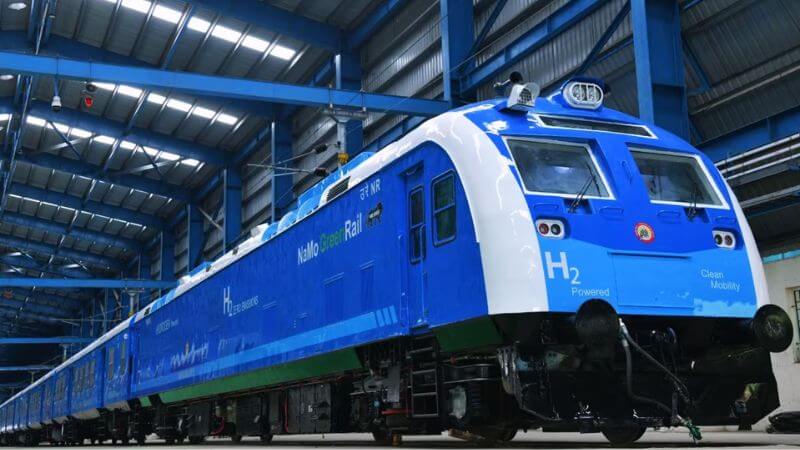
Hydrogen-powered trains differ significantly from conventional diesel locomotives. Instead of burning fossil fuels, these trains use hydrogen fuel cells to generate electricity. Inside the fuel cell, hydrogen reacts with oxygen from the atmosphere, producing electrical energy that powers the train.
Since no diesel combustion takes place, harmful emissions such as carbon dioxide are eliminated. The process releases only water vapour and heat, making hydrogen trains one of the cleanest forms of rail transportation currently available. The technology also reduces noise levels compared to traditional diesel engines while supporting India’s long-term goal of adopting cleaner and more sustainable transportation systems.
India Joins A Select Group Of Nations
With the launch of its first hydrogen-powered train, India now joins a small group of countries actively investing in hydrogen rail technology. Germany was the first country to deploy a hydrogen-powered passenger train commercially. The Alstom Coradia iLint became the world’s first hydrogen passenger train and set a record by completing a 1,175-km journey without refuelling in 2022. Germany continues to expand its hydrogen railway network and is expected to introduce additional hydrogen trains on the Sudostbayernbahn network.
Japan is also moving rapidly in this direction. The country is developing its first hydrogen hybrid train, named Hybari, which is expected to begin operations by the end of fiscal 2027 on the Tsurumi and Nambu lines near Tokyo. The United States has also entered the field. In 2024, California introduced Zemu, the country’s first hydrogen-powered passenger train in San Bernardino.
China has also been actively testing hydrogen-powered rail systems as part of its broader clean transportation initiatives. India’s entry into this growing list reflects its commitment to adopting global clean-energy innovations while developing indigenous railway technology.
Key Features Of India’s Hydrogen Train
- The country’s first hydrogen-powered train has been designed with modern technology and passenger comfort in mind.
- It features a 10-coach hydrogen fuel cell-based trainset powered by a 1,200 kW hydrogen fuel cell propulsion system.
- The train has been approved to operate at a maximum speed of 75 kmph, although its design speed is 110 kmph.
- It can accommodate approximately 2,600 passengers, making it suitable for high-capacity regional travel.
The project has been developed entirely from the design stage through prototype manufacturing, demonstrating India’s growing capabilities in developing advanced railway technologies domestically. Apart from introducing cleaner transportation, the project will also provide valuable operational data that can help shape future hydrogen-powered railway initiatives across the country.
A Step Towards Greener Railways
Indian Railways has been working on multiple initiatives to reduce its environmental impact, including electrification of railway routes, solar power projects, energy-efficient stations, and now hydrogen-powered trains. Hydrogen fuel cell technology could prove especially useful on routes where full electrification is not economically viable. Instead of relying on diesel locomotives, hydrogen trains offer a cleaner alternative without requiring overhead electric lines.
As the technology matures and production costs decline, hydrogen-powered trains could play an important role in supporting India’s long-term sustainability goals. The success of this pilot project will help determine how quickly similar trains can be introduced on other regional routes across the country.
Conclusion
The launch of India’s first hydrogen-powered train marks an important milestone in the country’s transportation sector. By introducing hydrogen fuel cell technology on the Jind-Sonipat route, Indian Railways has taken its first practical step towards cleaner and more sustainable rail travel.
Beyond showcasing technological progress, the project also demonstrates India’s commitment to reducing emissions and embracing future-ready transportation solutions. If the pilot delivers positive results, hydrogen-powered trains could become an increasingly common sight on Indian tracks, helping transform the railway network into one that is both efficient and environmentally responsible.
Follow Us: Facebook | Instagram | X |
Youtube | Pinterest | Google News |
Entertales is on YouTube; click here to subscribe for the latest videos and updates.