

A hospital is supposed to be a place of trust. A space where families lean on doctors when fear and uncertainty take over. But in Bhopal, that trust was brutally exploited. What seemed like a routine medical process turned into a chilling scam, as a man posing as a doctor preyed on desperate families—using inside information, fear, and a QR code to siphon money from those already fighting for their loved ones’ lives.
Just picture entering a hospital for treatment and then learning that the “doctor” who examined you never existed. Not a degree. Not a license. Just a well-crafted lie and a QR code. That’s precisely what happened in a hospital in Madhya Pradesh, where a phony doctor took advantage of people’s confidence in the internet to transform a straightforward scan into a major public health emergency.
How Did A Straightforward Phone Conversation Become A Nightmare?

What started off as a few dubious phone calls requesting money quickly turned into one of the most unsettling hospital-related fraud cases in Bhopal. The voice on the other end of the line wasn’t just any voice. The accused entered the hospital in person, spoke with families face to face, exuded confidence like a white coat, and gave them false optimism.
The scam took place at the biggest government hospital in Madhya Pradesh, Hamidia Hospital, where relatives of patients in critical condition are already feeling overburdened, nervous, and exposed.
Who Were The Intended Victims?
The accused carefully selected relatives of patients hospitalized in emergency medicine, pediatrics, and gynecology—three high-pressure units. At least ten families are thought to have been tricked since January, even though only three victims formally complained to the police. The fact that they did so shows that there were many more victims who remained silent. The losses amounted to over ₹30,000.
Who Was Responsible For The Fraud?
Police said that Jitendra Khagre, the accused, used extremely sensitive medical information to contact families while posing as a doctor. Investigators believe that he was aware of the identities, ward numbers, diagnoses, treatment status, and even personal phone numbers of patients, which were allegedly provided by hospital insiders.
Police claim that certain employees were paid a 20% commission for disclosing private patient information.
How Could Trust Be Established So Easily?
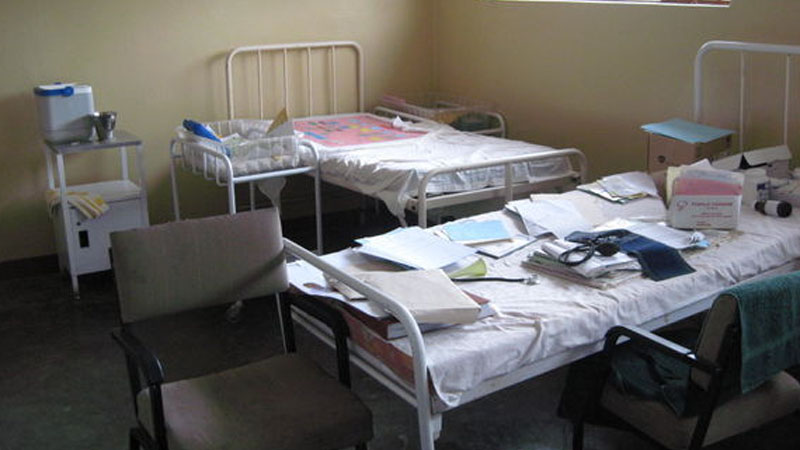
Equipped with confidential knowledge, Khagre would contact relatives and assert that the patient’s situation was urgent. He offered better care, quicker tests, or unique medical arrangements—but only if he was paid right away.
He frequently met families within the hospital while pretending to be a doctor in order to make the fraud seem more credible. The setting itself removed doubt from the minds of frantic relatives.
What Was The Sound Of The Calls?
Following the filing of a formal complaint, NDTV obtained an audio clip that demonstrates the weaponization of fear.
“Ten thousand rupees, please,” the caller says. “I’ll have the echocardiogram done.”
“Deliver the funds by 1:30 p.m. I can provide the QR code if you’d like.”
The threat in a different call was direct:
“The child and mother are in danger.” Transfer the funds right away.
Families in panic obeyed. ₹20,000 was transferred online in one instance alone. Soon after, the calls ceased.
What Were The Experiences Of The Victims?
Nitesh Vishwakarma was informed that his unborn child and pregnant wife were in danger. After transferring ₹8,000, he added ₹2,999. Then there was silence.
Someone posing as “Dr Arnav” called Vinod Ahirwar and demanded ₹5,000 via QR code, stating his wife had liver edema. The number was blocked after payment. An almost comparable occurrence was reported by Sanjay Batela. In these instances alone, more than ₹30,000 disappeared.
How Was The Accused Apprehended?
The hospital’s supervisor contacted the police after receiving numerous complaints. Before Khagre was taken into custody in Indore, cyber teams spent three days tracking the suspect’s phone. He was brought to Bhopal and charged with fraud and impersonation.
Is There A Wider Network Here?
Police believe so. It is suspected that at least seven hospital employees are involved. Investigators say internal backing was essential to the scam’s success.
The arrest was confirmed by Anil Bajpai, who stated:
“The defendant pretended to be a doctor and contacted patients’ families, defrauding them. He acknowledged in his statement that he received information from hospital staff. They might have been operating as a gang.”
What Is The Hospital’s Warning?
Suneet Tandon, the hospital’s superintendent, has issued a firm warning:
“No staff worker or doctor asks for more money.”
“No valid payment is required using the QR code. Such a call is fraudulent.”
Families have been urged to immediately inform hospital security and call 1930 in such cases.
Why Does This Case Matter?
This scam didn’t just steal money. It shattered trust inside a government hospital meant to save lives. It exposed alarming gaps in data security and showed how desperation can be manipulated with terrifying ease.
Conclusion
The Bhopal fake doctor scam is a wake-up call—not just for hospitals, but for the entire healthcare system. When sensitive patient data is compromised, lives are put at risk in more ways than one. As investigations continue, accountability and systemic reform will be crucial to ensure that hospitals remain places of healing, not hunting grounds for fraudsters.
Follow Us: Facebook | Instagram | X |
Youtube | Pinterest | Google News |
Entertales is on YouTube; click here to subscribe for the latest videos and updates.