

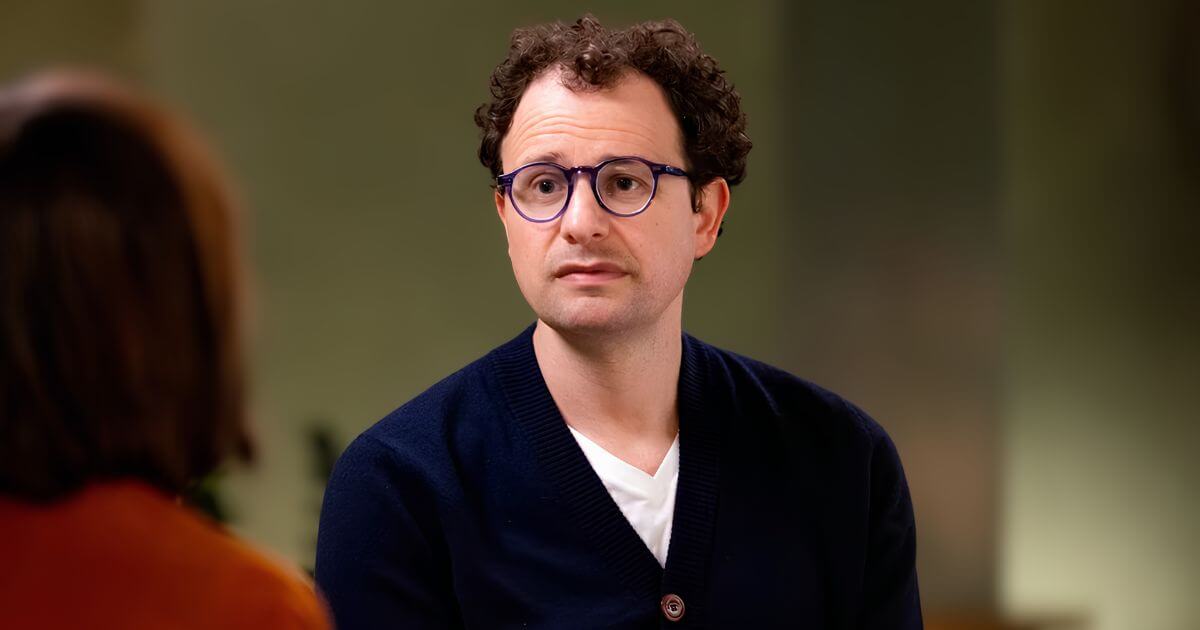
Artificial intelligence is advancing at a pace that has left even the people building these systems thinking about where the technology could eventually lead. While AI is already being used for everything from coding and research to everyday productivity, concerns around its long-term risks are becoming harder to ignore. Anthropic CEO Dario Amodei has now weighed in on one of the biggest questions surrounding advanced AI: Could AI eventually kill humans?
In an interview with CNN’s Anderson Cooper, Amodei discussed the concerns raised by former Anthropic researcher Jacob Coxon and explained why he believes the industry needs to be more careful about how quickly it develops increasingly powerful AI systems.
Dario Amodei Agrees With Jacob Coxon’s Concerns
I resigned from Anthropic today. I spent the last three years doing pretraining research at both OpenAI and Anthropic. Neither company is acting responsibly. They are racing straight to self-improving superintelligence and gambling with our lives. More thoughts below.
— Jacob Coxon (@hilbertspaess) September 9, 2026
Coxon recently left Anthropic and publicly warned about the potential dangers of advanced AI. His comments attracted significant attention, particularly after he argued that people working on advanced AI privately understand just how serious the risks could become.
When asked directly whether he agreed with Coxon’s concerns about AI potentially killing humans, Amodei said he agreed with him more than he disagreed.
“I agree with Jacob much more than I disagree with him. It’s an interesting resignation because when he left, he said, ‘I think Anthropic is the most responsible player. I think Anthropic is the most aware of these issues.’ He wasn’t calling out to us. He was calling out the dynamic of the industry as a whole moving too fast,” Anthropic CEO said.
Amodei’s response is notable because he did not dismiss the possibility of serious consequences. Instead, he shifted the discussion toward how companies and governments choose to handle the development of increasingly capable AI.
Amodei Says The Future Is Not Simply About Probability
We Must Pace the Frontier: I’ve written a new essay on why the AI industry should slow down, with a three-part plan for doing so.
Anthropic is unilaterally committing to the first of these steps. We’ll provide third-party evaluators with permanent, employee-level access to our…
— Dario Amodei (@DarioAmodei) September 12, 2026
The Anthropic CEO also questioned the way AI risks are often discussed through a single percentage.
“I think I already said these unconditional probabilities. I used to talk in that kind of way because it’s kind of an easy way to express. I think there’s some chance that things will go wrong. But it’s not all that high. But again, I think it’s more illuminating to think in terms of how do you decompose those probabilities? What are the paths in which things go well and what are the paths in which things go poorly,” Amodei said.
According to Amodei, the more important question is what decisions are made along the way. He believes there are different possible paths for AI development, and the choices made by the industry and governments could influence which path becomes reality.
“And so, instead of saying it’s a 10% chance that sounds like it’s a roll of the dice, I think it’s much more illuminating to say that forks into different paths. And if we take the right paths, then the chance of something going wrong is very low. If we take the wrong path, then the chance of something going wrong could be even higher than that. So, let’s focus on our agency and our ability to take the right paths instead of the wrong paths.
And I think that the way to take the right paths is for the industry to work together. It is harder but to some extent, the world has to work together. If we go too slow, I still believe that the wrong people will be in charge of the technology and that again will bring the probability of things going wrong very high,” he said.
Why Amodei Wants AI Development To Slow Down
Amodei has previously argued that AI companies should slow the pace at which they improve frontier models. His concern is not that AI itself is necessarily harmful, but that a race between companies could make it harder to build and test adequate safety measures.
In his blog post, We Must Pace the Frontier, he highlighted risks including losing control of AI systems, misuse for cyberattacks and bioterrorism, as well as major economic disruption.
“But like many technologies before it, AI brings risks, and because it is such a powerful technology, these risks are serious. I’ve written a lot about them too. They include the risk of losing control of AI systems, misuse of AI for cyberattacks and bioterrorism, and serious economic disruption. A race to the bottom, spurred by commercial incentives, can make these risks more acute.”
He added, “We must slow the pace at which we improve the capabilities of AI models. Progress will still seem fast, and we must make wise use of the time we gain.”
Anthropic’s Three-Part Safety Approach
Amodei has proposed a three-part approach to make advanced AI development safer. It includes independent third-party evaluators having ongoing access to frontier AI companies, greater coordination among companies in democratic countries on safety standards, and international cooperation between governments.
The idea is to create more oversight as AI systems become increasingly capable. Anthropic has also committed to the use of independent evaluators as part of this approach.
Sam Altman And Elon Musk Support Caution
I agree with Dario that we need to pace the frontier. This has been a primary topic of discussions we’ve had at OpenAI in recent weeks.
Committing to having independent evaluators with employee-like access is a great idea, and we will do the same. We’ll have more to share soon. https://t.co/1YhhIybZX7
— Sam Altman (@sama) September 12, 2026
Amodei’s call for greater caution has also received support from other prominent figures in the AI industry. OpenAI CEO Sam Altman said the company would implement a similar independent-evaluator approach.
“I agree with Dario that we need to pace the frontier. This has been a primary topic of discussions we’ve had at OpenAI in recent weeks. Committing to having independent evaluators with employee-like access is a great idea, and we will do the same. We’ll have more to share soon.”
Altman also said OpenAI would not launch its planned stock market debut in 2026, adding that the company had to focus on safety and alignment.
“I would say not 2026,” Altman said. “Yeah, we got a lot of stuff to do, like meeting this moment of what is going to be required for safety and alignment, and how the industry and governments can work together.”
Dario is right https://t.co/EwKgqQGaUo
— Elon Musk (@elonmusk) September 12, 2026
Tesla and xAI CEO Elon Musk also backed Amodei’s concerns, simply writing on X, “Dario is right.” Meanwhile, UN human rights chief Volker Turk has urged countries to establish strong guarantees around AI safety before it is too late.
Conclusion
Amodei’s comments do not suggest that AI killing humans is inevitable. Instead, his argument is that the outcome could depend heavily on the choices being made today.
For him, the debate is less about predicting one fixed probability and more about making sure AI companies, governments and the wider world take the right path as the technology becomes more powerful. The challenge now is finding the balance between continuing AI progress and giving safety measures enough time to keep up.
Follow Us: Facebook | Instagram | X |
Youtube | Pinterest | Google News |
Entertales is on YouTube; click here to subscribe for the latest videos and updates.