


Forget diamonds and gold—there’s a substance on Earth so rare and valuable that it makes everything else look cheap. We are talking about Antimatter. Priced at an unimaginable ₹5,27,00,00,00,00,000 per gram, this isn’t fiction—it’s real, and it’s changing the way we think about science, technology, and even the universe itself. So, what exactly is this mysterious material? Why is it so incredibly expensive? And what secrets does it hold?
In a world where even a chocolate bar might seem excessively costly, nothing comes close to the amazing price of antimatter, the costliest material in existence. At an incredible ₹5,27,00,00,00,00,000 ($62 trillion) per gram, the value of this elusive material is so great that it exceeds ordinary costs.
What Is Antimatter?
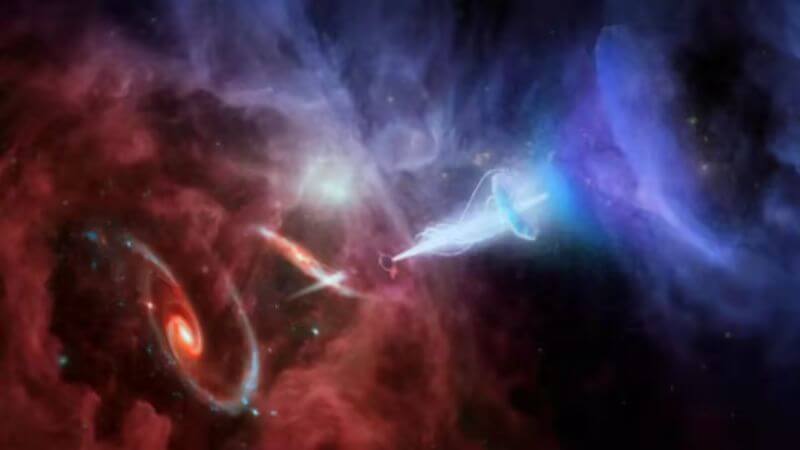
Consider a cosmic mirror to comprehend antimatter. Antimatter contains anti-electrons (positrons), anti-protons, and anti-neutrons, just as we have electrons, protons, and neutrons. Despite having opposite charges, they have the same mass and behave similarly in many ways. Therefore, an anti-proton has a negative charge, whereas a proton has a positive charge. Strange, actually?
The true surprise is that a particle of matter and its antimatter double instantly destroy one another. Not a single spark. No trash. A pure energy burst. Because one gram of antimatter might create energy equal to a nuclear bomb with no radiation, scientists believe it could be the universe’s most potent fuel source.
Antimatter is a real substance and not just a science fiction topic. Antimatter is matter composed of antiparticles with the opposite electrical charge of ordinary particles and different quantum numbers.
Normal matter is the opposite of antimatter. In a flash of pure energy, a particle and its antimatter counterpart annihilate one another. Although antimatter cannot be purchased, physicists calculate that it would theoretically cost an astounding $62 trillion per gram to produce! This is due to the fact that producing and storing antimatter is extremely challenging and energy-intensive.
Why Is Antimatter So Expensive?
Unlike precious metals or stones, antimatter cannot be extracted. Its manufacture is almost impossible since it needs to be delicately put together, atom by atom. Indeed, gathering even a single gram may take billions of years. According to the 2009 movie Angels & Demons, antimatter is basically regular matter’s “evil twin,” with the ability to destroy itself in a tremendous energy explosion when it collides. This strong reaction contributes to the difficulty and cost of studying and storing antimatter.
What Makes It So Expensive?
Part of the reason antimatter is so costly is that it can only be produced at CERN (the European Organization for Nuclear Research) in particle accelerators such as the Large Hadron Collider (LHC). In 1999, scientists at NASA estimated that the cost of producing one gram of antimatter or antihydrogen would be $62 trillion.
There is only one electron and one proton in a hydrogen atom. This indicates that an antiproton and a positron combine to generate antihydrogen, the most basic type of antimatter. CERN created the first antihydrogen back in 1995.
According to scientists, the most expensive material to produce is antimatter. In 1999, NASA provided a price of $62 trillion per gram of antihydrogen, whereas Gerald Smith predicted in 2006 that $250 million could make 10 milligrams of positrons, or $25 billion per gram. This is due to the difficulty of production (reactions in particle accelerators only yield a small number of antiprotons) and the increased demand for particle accelerators for other purposes.
Where Antimatter Is Stored?
If creating antimatter is like trying to catch lightning in a bottle, storing it is like trying to hold fire in your bare hands.
The reason? Because antimatter reacts with whatever matter it comes into contact with, destroying both itself and an equivalent amount of the container. It cannot be kept in a container composed of conventional matter.
A Penning trap is a device that uses a mix of electric and magnetic fields to hold antimatter in the form of charged particles. Atomic traps are utilized for antimatter made out of uncharged particles, which this device cannot contain.
Follow Us: Facebook | Instagram | X |
Youtube | Pinterest | Google News |
Entertales is on YouTube; click here to subscribe for the latest videos and updates.