
Cheques may no longer be the first choice for everyday payments, but they are still widely used for property transactions, business payments, loans and other high-value financial arrangements. That makes cheque security important even in the age of UPI and instant bank transfers.
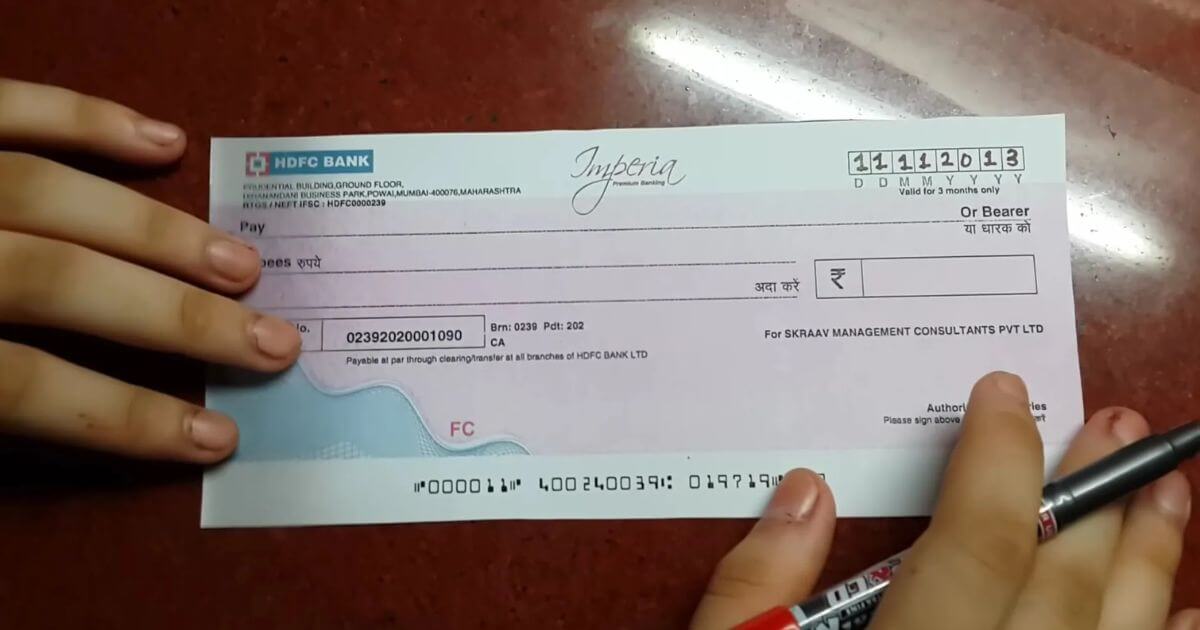
Banks have been adding security features to cheque leaves to reduce the risk of fraud and tampering. One such feature is an alphanumeric security code, which combines letters and numbers and can help banks verify cheque leaves during processing.
However, there is an important point customers should know. The presence of an alphanumeric code is not a universal new cheque rule that automatically makes every older cheque invalid. Bank-specific instructions matter. Bank of India, for example, introduced an alphanumeric code on its new-series cheque leaves and has encouraged customers to replace older cheque books.
What Is The New Alphanumeric Code On Cheques?

An alphanumeric code is a combination of letters and numbers printed on a cheque leaf. Banks can use the code as an additional security and verification feature when processing cheques.
Bank of India introduced this feature in 2022 as part of its efforts to curb cheque-related fraud. Its policy states that the system validates the alphanumeric code printed on leaves from the new-series cheque book during certain transactions. The bank has also advised customers to replace old-series cheque books with the newer series.
The idea is relatively simple. A cheque is not just a piece of paper containing the account holder’s signature. It contains several details that must be verified before the payment is processed. Additional security features can make it harder for fraudsters to manipulate or misuse cheque leaves.
Why Are Banks Adding More Security Features?
Cheque fraud can involve alterations, forged signatures, stolen cheque leaves and other forms of tampering. Banks have therefore been strengthening controls around cheque processing.
The Reserve Bank of India has previously prescribed standardised security features for cheque forms under the Cheque Truncation System, or CTS. The RBI said these measures were intended to curb cheque fraud caused by alterations and improve customer and bank protection.
The RBI has also promoted Positive Pay as an additional safety mechanism for cheque payments. Under Positive Pay, key cheque details can be reconfirmed before a cheque is processed, adding another layer of protection against fraudulent alterations. These measures are particularly relevant when cheques involve large amounts.
Is Your Old Cheque Book Still Valid?
This is where customers need to be careful. There is no basis in the information provided to say that every old cheque book across every Indian bank has automatically become invalid in 2026 simply because it does not carry an alphanumeric code. Bank-specific rules can differ.
For example, Bank of India’s policy specifically encourages customers to replace old-series cheque books with its new-series cheque books carrying the alphanumeric code. So, if you have an older cheque book lying at home, do not assume that it has automatically stopped working. Instead, check your bank’s latest communication or contact your branch before using it, especially for a high-value transaction.
This distinction is important because social media posts and headlines can sometimes make a bank-specific security update appear like a blanket rule for the entire banking system.
What About The December 31, 2026 Deadline?
Some reports and online discussions have mentioned December 31, 2026 as a deadline for certain cheques without the new security code, particularly for cheques worth Rs 50,000 or more. Customers should not treat this date as a universal RBI deadline without checking their bank’s official communication.
If your bank has specifically asked you to replace your old cheque book, follow that instruction. If you are unsure, contact the bank directly and ask whether the cheque series linked to your account is still accepted. This is especially important before making a large payment. A few minutes spent checking with the bank can prevent a payment from being delayed or returned.
What Is Cheque Truncation System?
Another major development in cheque processing is the Cheque Truncation System (CTS). Under CTS, the physical movement of a cheque through the clearing process is stopped. Instead, the cheque’s electronic image and relevant data are transmitted to the paying bank for processing. The system is designed to make cheque clearing faster and more efficient. The RBI has said CTS is operational across India and has been an important part of the country’s cheque-clearing infrastructure.
This also explains why security features on the physical cheque remain important. Even though the paper cheque may not physically travel through the entire clearing process, its image and information are used for verification.
How Long Is A Cheque Valid In India?
Another cheque rule that customers should remember is the validity period. A cheque is generally valid for three months from the date written on it. The RBI directed banks not to make payment on cheques presented beyond three months from the date of the instrument.
That means you should not keep a cheque for months and assume you can deposit it whenever convenient. If a cheque is approaching the end of its validity period, it is better to deposit it promptly. If it becomes stale, the drawer may need to issue a fresh cheque.
What Happens If A Cheque Is Dishonoured?
A cheque can be returned unpaid for several reasons. These may include insufficient funds, signature mismatch, incorrect details, technical issues or other reasons related to the transaction. Cheque dishonour can have serious consequences in certain circumstances. Section 138 of the Negotiable Instruments Act, 1881 deals with cheque dishonour subject to the conditions prescribed under the law.
Therefore, both the person issuing a cheque and the person receiving it should treat cheque payments seriously. Keeping adequate funds in the account, checking the details carefully and using the latest cheque book recommended by the bank can reduce avoidable problems.
Does Every Bank Use The Same Security Code?
Not necessarily. This is one of the most important points for customers to understand. Banks can introduce additional security features according to their systems and operational requirements. The alphanumeric code discussed here is specifically documented by Bank of India as a feature of its new-series cheque books.
Customers of other banks should therefore check their own bank’s rules instead of assuming that the same code, format or replacement deadline applies to them. Your bank’s mobile app, website, branch or customer-care service should be the first place to check for an official instruction.
What Should You Do If You Still Use Cheques?
If you regularly use cheques, there are a few simple precautions worth following. First, check whether your bank has issued a new cheque-book series with additional security features. If it has asked customers to replace an older series, request a new cheque book.
Second, avoid keeping signed blank cheques. A signed cheque can create a serious security risk if it falls into the wrong hands. Third, keep your cheque book in a secure place. Treat it like your debit card or other sensitive banking documents. Fourth, check the amount, date and payee name carefully before handing over a cheque.
For high-value payments, also ask your bank whether Positive Pay is available and whether it is recommended or required for the particular transaction. The RBI has promoted Positive Pay as a mechanism to reduce cheque-related fraud.
Why Customers Should Not Panic Over Viral Claims
Whenever banks introduce new security measures, rumours about cheque books can spread quickly. A headline suggesting that “all old cheques will stop working” can create unnecessary confusion if the actual instruction applies only to a particular bank or cheque series. The safest approach is simple. Do not rely on social media forwards for banking rules.
Check the official communication issued by your bank. If there is any uncertainty, speak to the branch or customer-care team before issuing a cheque. This becomes even more important when the payment involves a large amount of money.
Conclusion
Cheque books are changing as banks continue to strengthen security and modernise payment processing. The alphanumeric code is one such security feature, with Bank of India already using it on its new-series cheque leaves and encouraging customers to move away from older cheque books. But customers should not assume that one bank’s update automatically applies to every bank in India.
If you still use cheques, check your bank’s latest instructions and make sure you are using the appropriate cheque series. Also remember that cheques are generally valid for three months from the date written on them.
The larger message is about security. As cheque fraud continues to remain a concern, banks are adding more verification layers to protect customers. Keeping your cheque book updated and following your bank’s official instructions can help ensure that your next cheque payment goes through without unnecessary trouble.
Follow Us: Facebook | Instagram | X |
Youtube | Pinterest | Google News |
Entertales is on YouTube; click here to subscribe for the latest videos and updates.