
CBSE is about to change something that directly impacts millions of students — the way answer sheets are evaluated. For the first time, Class 12 board exam copies will no longer travel in bundles across evaluation centres. Instead, they’ll be scanned and checked digitally. This shift toward On-Screen Marking could redefine how fast, accurate, and transparent board results are in India.
Here’s everything students and parents need to know about this big move. There will soon be a significant change in the way board exam answer papers are reviewed in India. To assess Class 12 board exam answer sheets digitally, the Central Board of Secondary Education (CBSE) is using a new on-screen marking method. Answer sheets will now be scanned and evaluated on computers rather than being delivered in stacks of paper copies to evaluation centers.
This creates significant concerns for parents and students in the thousands. Will marking be quicker with digital checking? Will it be more precise? Can it lessen bias or mistakes? Most significantly, what effect will it have on the results of Class 12?
Here is all the information you need to understand the new on-screen marking system and its implications for pupils. As CBSE transitions to a more technologically advanced grading method, the CBSE board exams are quickly approaching, and parents and children need to be aware of a significant change this year.
For Class 12 answer sheets, the Central Board of Secondary Education (CBSE) has implemented a new assessment technique known as the On-Screen Marking (OSM) system. Class 12 papers will now be assessed digitally, while Class 10 copies will still be examined the old-fashioned way.
This action represents a significant turn toward technology-driven evaluation. However, what is digital screen marking exactly? How does it operate? And why has CBSE chosen to put it into effect at this time? Let’s put it in plain language.
Digital Screen Marking: What Is It?
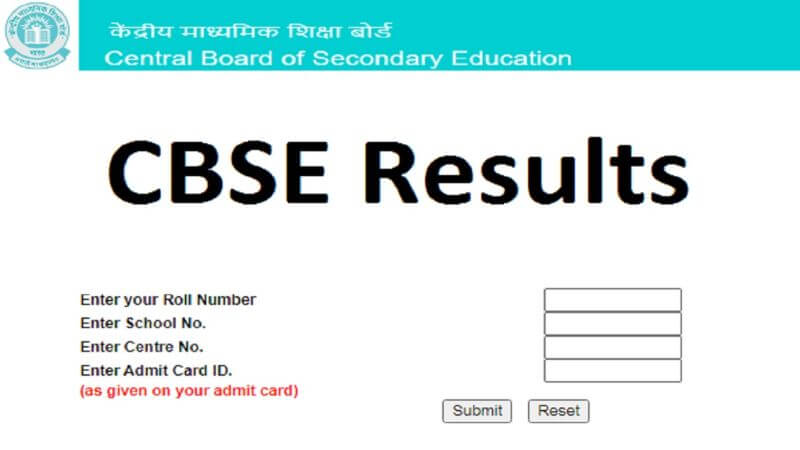
The On-Screen Marking (OSM) system, sometimes referred to as digital screen marking, is a contemporary method of verifying answer sheets after the tests are over. CBSE will scan the answer sheets rather than delivering actual bundles to evaluation centers.
A secure online platform will then receive these scanned answer sheets. Using laptops, tablets, or desktop computers, teachers will view the copies online and assess them instantly on-screen.
How Will Teachers Examine Digital Copies?
Following the upload of the scanned copies:
- Instructors sign in to a safe system.
- Every answer sheet is viewed digitally by them.
- The system receives marks directly.
- The total marks are determined automatically by the software.
Examiners won’t have to manually compute aggregates in the end as a result. The approach increases accuracy and lowers the possibility of calculation errors.
Why Is Digital Evaluation Being Introduced By CBSE?
The goal of CBSE is to make the assessment procedure:
- More precise: Human error is decreased by automatic computation.
- Faster: The delays brought on by shipping physical copies are eliminated with digital distribution.
- Safe: Scanned copies are kept in a digital system under supervision.
- Efficient: Teachers don’t need to handle heavy bundles of paper to assess students; they can use dedicated digital setups.
The action is a reflection of CBSE’s attempts to update the board test system and bring it into line with digital standards.
Will Class 10 Copies Be Digitally Verified As Well?
No. For the time being, the On-Screen Marking method will only be used to analyze Class 12 answer papers. The old-fashioned physical method of checking Class 10 answer sheets will still be used.
When Do The CBSE Board Examinations Start?
On February 17, the CBSE board exams are expected to start. The evaluation of answer sheets will be significantly altered by the implementation of digital marking for Class 12 exams this year.
What Are The Implications For Students?
The modification has no bearing on how pupils write their tests. The format and pattern are unchanged. Nonetheless, digital assessment could:
- Minimize the likelihood of totaling errors
- Boost transparency
- Accelerate the process of preparing results
India’s board exam system is gradually changing as a result of CBSE’s move to digital assessment for Class 12, which combines traditional testing with contemporary technologies.
Conclusion
CBSE’s shift to on-screen marking for Class 12 is more than just a technical update — it’s a structural change in how board exams are evaluated. If implemented smoothly, it could reduce human errors, speed up results, and bring greater transparency to the system. For students, nothing changes inside the exam hall. But behind the scenes, India’s board evaluation process is clearly entering a more digital future.
Follow Us: Facebook | Instagram | X |
Youtube | Pinterest | Google News |
Entertales is on YouTube; click here to subscribe for the latest videos and updates.