
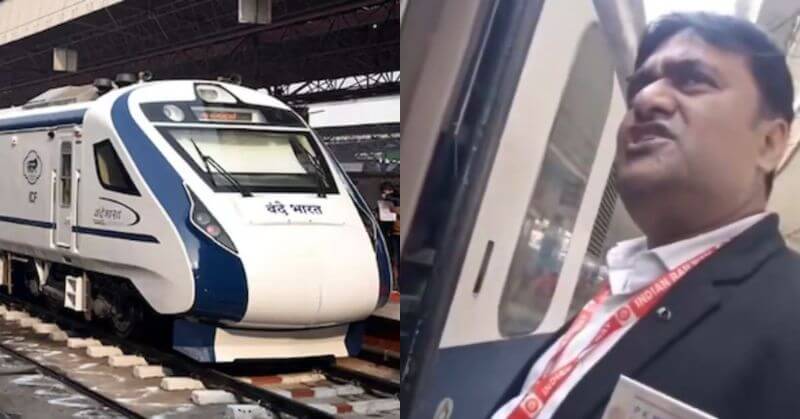
The Indian Railways has once again landed in the middle of a viral controversy after a video allegedly showed a Travelling Ticket Examiner (TTE) offering a Vande Bharat Express seat at an unofficial discounted price. The clip spread rapidly across social media platforms and triggered strong reactions from passengers online. While many users criticised the alleged misuse of authority and questioned transparency in the railway system, others viewed the incident as an example of the “adjustment culture” that has existed in train travel for years.
The controversy became serious enough for railway authorities to step in quickly. Following widespread outrage online, the TTE seen in the viral clip was suspended pending a detailed investigation.
The incident has now reignited conversations around corruption, unofficial ticket practices, and accountability within India’s railway system.
A Vande Bharat TTE Arranging Seat For ₹380
Vande Bharat ₹750 ticket was being arranged by the TTE for just ₹380.⁰
This guy records it and made it viral😭 pic.twitter.com/hjHH35rPAC— Ghar Ke Kalesh (@gharkekalesh) May 12, 2026
According to reports, the incident took place aboard a Vande Bharat Express train. A video shared on X allegedly captured the interaction between a passenger and a railway official inside one of the coaches.
In the clip, the TTE was allegedly heard discussing a seat arrangement with the passenger. Reports claimed the official fare for the journey was close to ₹700. However, the railway official allegedly offered to arrange the ticket for ₹380 instead.
The conversation immediately raised eyebrows online because onboard ticket issuance by railway staff is governed by strict procedures and official fare rules.
What made the situation more controversial was the fact that the official reportedly admitted during the conversation that such an arrangement was “not allowed.” Despite acknowledging that, he allegedly continued discussing the lower amount instead of directing the passenger towards official booking methods.
The video soon started circulating widely across social media, with users tagging railway authorities and demanding action.
Railways Responds After Viral Backlash
— RailwaySeva (@RailwaySeva) May 12, 2026
As public criticism increased online, Indian Railways authorities reacted swiftly to the controversy. Railway Seva and the DRM Danapur division reportedly took note of the viral clip and initiated action against the staff member involved.
Soon after the incident gained traction online, the TTE was placed under immediate suspension while a detailed investigation into the matter was launched.
Railway officials are now reportedly examining whether there was any violation of ticketing rules, misuse of authority, or irregularity in onboard seat allocation.
The quick suspension also reflected how social media has increasingly become a powerful accountability tool in recent years. Viral videos now often force authorities to respond faster than before, especially in cases involving public services.
Why The Incident Triggered Debate Online
The controversy sparked divided reactions online.
A large section of users criticised the alleged behaviour and called it a clear example of corruption inside the system. Many argued that such unofficial ticket deals hurt transparency and create unfair advantages for certain passengers.
Several users pointed out that Vande Bharat trains are premium services where ticket demand remains consistently high. Because of that, even small irregularities attract major public attention.
At the same time, another section of social media reacted with sarcasm rather than outrage. Some users joked that these kinds of “adjustments” have existed in Indian train travel for decades.
Others even defended the TTE, claiming he was simply “helping” a passenger find a seat during travel.
That response itself started another debate online. While some people viewed the incident as an act of convenience, others argued that normalising unofficial practices is exactly what weakens public trust in the system.
The mixed reactions reflected how deeply embedded informal practices still remain in everyday public life across India.
Rules Around Onboard Ticket Issuance
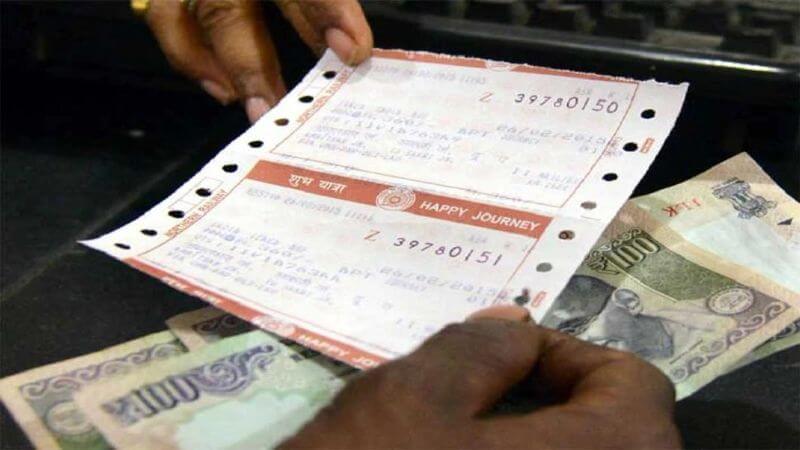
Indian Railways does allow TTEs to issue onboard tickets in certain situations. For example, passengers with waitlisted tickets may sometimes receive confirmed seats if vacancies are available after chart preparation.
Similarly, vacant seats can also be allocated to passengers under specific railway guidelines.
However, all such transactions are supposed to follow proper procedures, official fare structures, and transparent payment systems.
Any deviation from approved ticketing rules is considered a serious violation.
Railway authorities have repeatedly emphasised that onboard ticket issuance must remain fully documented and compliant with official regulations. Unofficial cash dealings or fare manipulation are treated as misconduct.
That is why the viral clip immediately attracted attention from higher authorities.
Social Media’s Growing Role In Public Accountability
The incident also highlighted the growing influence of social media in exposing alleged irregularities within public systems.
In earlier years, such incidents may have remained unnoticed or limited to word-of-mouth discussions among passengers. Today, however, one short video can instantly reach millions of users online and trigger nationwide discussions.
Platforms like X have increasingly become spaces where citizens directly tag authorities, share complaints, and demand accountability.
In this case too, the viral clip rapidly gained attention and eventually led to administrative action against the railway staff member.
At the same time, experts often warn that investigations should rely on verified facts rather than only online reactions. Since the inquiry is still ongoing, railway authorities are expected to examine the complete context before reaching final conclusions.
The Bigger Question Around Public Trust
The controversy has once again raised larger questions about transparency and public trust in essential services.
Indian Railways remains one of the largest public transport systems in the world, carrying millions of passengers every day. Because of its massive scale, maintaining discipline and accountability across every level becomes extremely important.
Incidents involving unofficial practices, even if isolated, tend to damage public confidence quickly.
For many passengers, railway journeys are not just about transportation. They are about safety, fairness, and reliability. That is why any allegation involving ticket manipulation naturally sparks strong public reactions.
Conclusion
The suspension of the TTE following the viral Vande Bharat video has once again put the spotlight on transparency within Indian Railways. While the investigation is still underway, the incident has already triggered widespread discussions online about unofficial practices, public accountability, and corruption in everyday systems.
The viral clip divided social media users between criticism and sarcasm, but it also highlighted how quickly public attention can now force administrative action.
As railway authorities continue their inquiry, the case serves as another reminder that trust in public services depends heavily on fairness, transparency, and strict adherence to rules.
Follow Us: Facebook | Instagram | X |
Youtube | Pinterest | Google News |
Entertales is on YouTube; click here to subscribe for the latest videos and updates.