
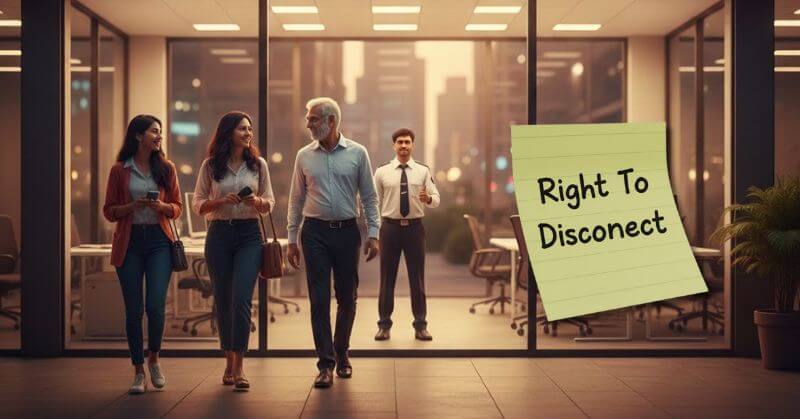
No late-night emails. No weekend work calls. And no so-called “urgent” messages after office hours that can easily wait till the next day. That’s the core promise behind the newly introduced Right to Disconnect Bill 2025, which aims to protect Indian workers from burnout and constant digital pressure. Tabled in the Lok Sabha by NCP MP Supriya Sule, the bill could mark a turning point in India’s work culture at a time when work-life balance is under severe strain.
The measure seeks to support Indian workers’ and employees’ work-life balance. On Friday, a private member’s bill was presented. Notably, members of the Upper and Lower Houses have the authority to introduce bills on matters they feel call for legislative action.
Supriya Sule Presents Social Security Bills, Paternity Benefits
Although the Right to Disconnect Bill received a lot of attention, the Lok Sabha considered other proposals as well. The Paternity and Paternal Benefits Bill, 2025, and the Code on Social Security (Amendment) Bill, 2025, are two more initiatives that NCP MP Supriya Sule submitted. These bills represent a major attempt to overhaul India’s labor and family welfare framework.
The Paternity and Paternal Benefits Bill, 2025, seeks to legally grant men paid paternity leave, encouraging them to actively participate in childcare during the early stages of birth, according to a post published on X by Sule. She added, “It breaks the old model of parenting, supports mothers’ wellbeing, and promotes shared flexible parenting.”
The MP further emphasized that the Right to Disconnect Bill, 2025, is intended to safeguard workers from late-night work messages, calls, and exhaustion brought on by 24/7 connectivity by allowing them to disconnect from work after duty hours.
Additionally, Sule presented the Code on Social Security (Amendment) Bill, 2025, to the House in order to improve worker protection in contemporary employment structures. This measure gives platform-based gig workers access to social security, minimum pay, controlled working hours, and equitable contract terms by explicitly recognizing them as a distinct labor category. According to Sule, the amendment seeks to create a “fairer, more sustainable economy for gig workers,” who are currently the foundation of digital delivery and service platforms.
What Is Said In The Right To Disconnect Bill?
The new law highlights a growing concern: the availability of staff around the clock. The bill cites research that shows 24/7 access causes stress, emotional exhaustion, sleep deprivation, and overwork. The lines between personal and professional life have become more hazy due to the constant pressure to check messages, emails, and updates even on weekends or holidays. This is known by researchers as telepressure, a syndrome that is becoming more closely associated with burnout and deteriorating mental health.
“Info-obesity,” a condition where constant exposure to work alerts and digital communication overwhelms the brain and impairs focus and productivity, is another issue brought up.
The Bill does, however, also recognize that various businesses have distinct work cultures. Under the Right to Disconnect, organizations and employees can jointly determine limits, standards, and expectations instead of imposing a strict framework.
Crucially, it emphasizes that workers must receive overtime pay at their usual wage rate if they consent to work past regular hours, whether or not they do so remotely. This provision aims to stop the increasing tendency of unpaid digital overtime caused by flexible and hybrid work arrangements.
The Right to Disconnect Bill 2025 is more than just a legal proposal — it reflects a growing public demand for healthier work boundaries in the digital age. Alongside stronger social security for gig workers and long-overdue paternity benefits, these proposals signal a wider push toward a more balanced, humane, and future-ready work culture in India. Whether these bills turn into law or not, the conversation around mental health, fair work hours, and family wellbeing is now firmly in the national spotlight.
Follow Us: Facebook | Instagram | X |
Youtube | Pinterest | Google News |
Entertales is on YouTube; click here to subscribe for the latest videos and updates.