
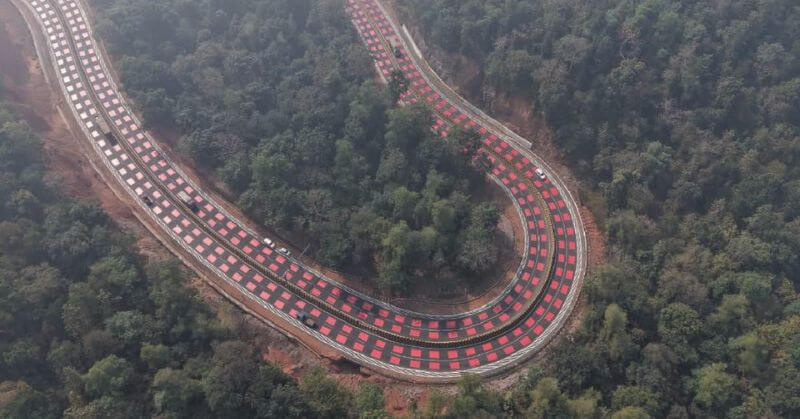
Imagine cruising through a quiet forest highway and suddenly spotting bright red stripes glowing across the road — almost like nature itself is waving a warning sign. These striking new markings aren’t just for show. They are part of an innovative experiment in Madhya Pradesh, where officials are testing a bold idea: can a red color alone make drivers slow down enough to save wildlife?
The initiative has sparked curiosity, discussion, and hope — especially in regions where animals regularly cross busy roads and accidents have become a serious concern.
Red Road Markings In MP Forest Highway
India’s first-ever red tabletop road markings on the Jabalpur–Bhopal highway to slow down vehicles on sharp forest turns and protect animals crossing the road.#MadhyaPradesh #MPNews #FreePressMP pic.twitter.com/SqprzILUIk
— Free Press Madhya Pradesh (@FreePressMP) December 11, 2025
Madhya Pradesh is testing a novel approach to road safety that aims to save animals by merely encouraging vehicles to slow down.
The National Highways Authority of India (NHAI) has started applying striking red strips on the asphalt along the congested Jabalpur–Bhopal route. These unique markers are a part of a first-of-its-kind experiment designed to warn drivers and encourage them to slow down in places where animals commonly cross the road.
About 60 kilometers from Jabalpur, the Nauradehi Sanctuary is traversed by a lengthy stretch of this highway. Deer, jackals, sambar, tigers, and a number of other animals can be found in the area. Additionally, officials claim that some areas of the highway are still prone to accidents even with 8-foot-tall iron fencing on both sides.
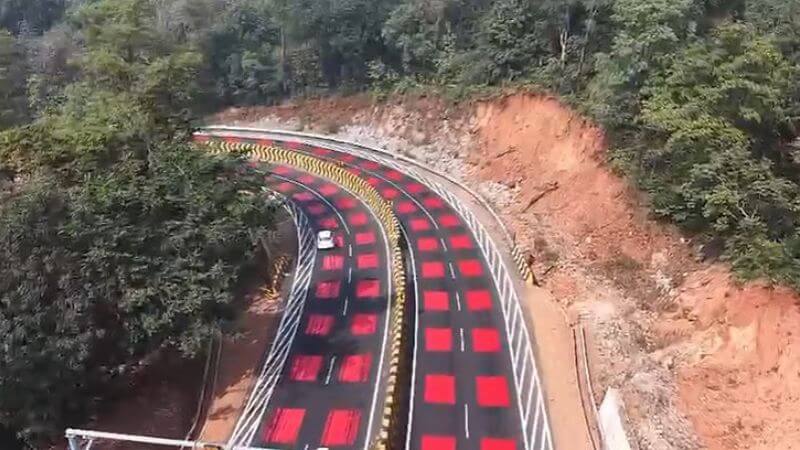
NHAI has implemented the red “tabletop” markers throughout over 12 km of the road in order to address the issue. The idea is straightforward: create an abrupt visual difference that draws a driver’s attention right away and causes them to slow down. Amritlal Sahu, an official with the NHAI, stated,
“This work is underway and will be expanded further. This is the first time red markers have been used. We are accustomed to seeing white and yellow road lines. The intention is for people to automatically slow down in these zones, which identify hazardous areas where wild animals might cross.”
An additional level of urgency is added by the tiger population in the sanctuary. Tigers are more likely to approach or cross the highway as their range grows.
“There are 25 underpasses on this road that allow wildlife to cross from one side to the other,” Sahu continued, adding that the current infrastructure already facilitates animals’ safe mobility. However, the red markers were still necessary. These visual cues compel drivers to slow down, protecting both drivers and animals.
The newly designated risk zone spans about 12 kilometers, and the ₹122-crore highway is anticipated to be finished in 2025.
Conclusion
Madhya Pradesh’s bold red road markings represent a fresh, practical shift in India’s efforts to protect wildlife on busy highways. Instead of relying only on fences or underpasses, this idea taps into instinct — making drivers slow down without physical barriers.
If this experiment succeeds, it could become a model for forest corridors across India, where the struggle between fast highways and wildlife movement remains a painful reality. For now, the red-striped stretch stands as a reminder that sometimes, saving lives begins with something as simple as changing the color of the road.
Follow Us: Facebook | Instagram | X |
Youtube | Pinterest | Google News |
Entertales is on YouTube; click here to subscribe for the latest videos and updates.