
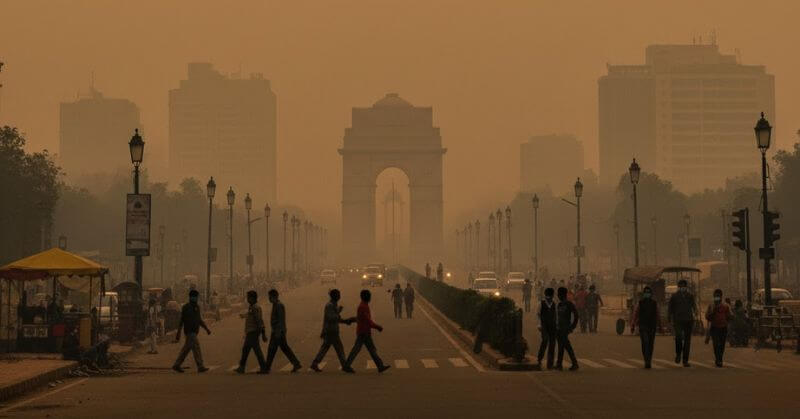
The air in India has reached a breaking point. From Delhi’s grey skies to the smog-filled towns of Bihar and the Northeast, the latest satellite-based analysis has exposed a frightening truth: not a single Indian city meets the World Health Organization’s clean air standards. This is not just a seasonal crisis or a winter inconvenience — it is a national emergency affecting every breath millions take. The numbers are alarming, the impact is deadly, and the urgency has never been greater.
An average of 101 µg/m3 PM2.5 was found in the air of Delhi between March 2024 and February 2025. In perspective, it is over 2.5 times the national limit of India and a staggering 20 times the acceptable international limit that the WHO sets. But it is not only Delhi that is in this crisis. Pollution has assumed a toxic hold on the nation, starting from the eastern side of the country up to the central state of Bihar.
This information is provided by the Centre for Research on Energy and Clean Air (CREA), and it is a frightening image of a country that is finding it difficult to breathe.
PM2.5: The Silent Killer
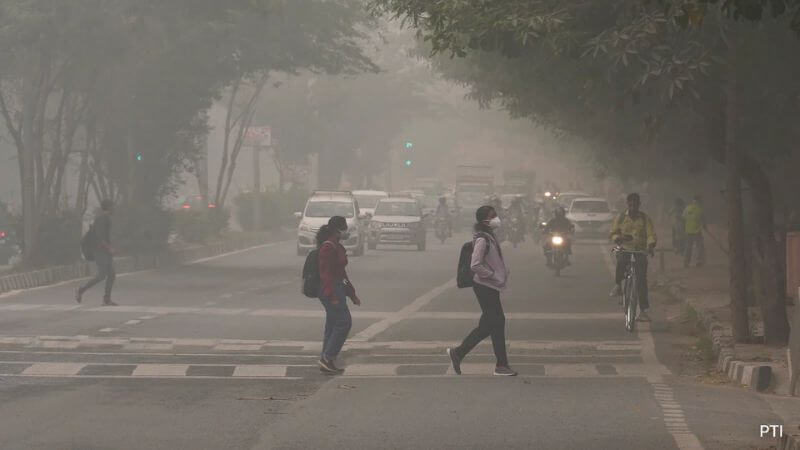
We should have a clear idea of what we are talking about before proceeding into details. PM2.5 is a term used to refer to particles 2.5 micrometers or less in diameter. These are extremely tiny particles, almost 30 times smaller than the width of a human hair.
Why should you care? They do not simply irritate your throat and make you cough. These microscopic particles are very dangerous. They enter your lungs and get into your bloodstream. Once they get there, they do everything to ruin your body:
- They hurt your heart and put you at risk of having heart disease.
- They trigger strokes.
- They cause lung cancer.
- They result in serious breathing issues.
- They impair the development of the lungs in children as they grow.
- They cause premature death.
These particles come from various sources: the vehicles on our roads, power plants that use coal, industrial discharges, the burning of crop residue, and the winter smog that traps all these pollutants near the ground.
WHO suggests that the PM2.5 level should be only 5 µg/m3. The national standard of India is 40 µg/m3 — already eight times less strict. But this loose standard cannot be attained in most Indian districts.
The Whole Story Of India: Most Polluted Regions
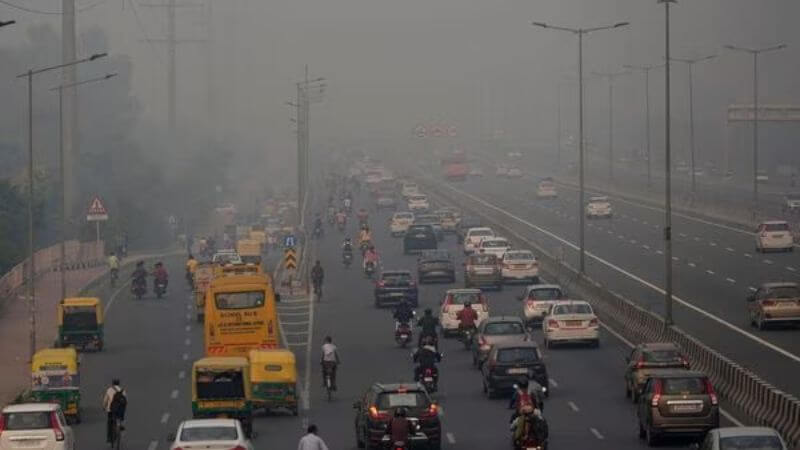
Delhi may be taking headlines, but the pollution issue goes much further. Here’s how other regions rank:
The CREA analysis studied 749 districts in India. The results are alarming: 447 districts, or 60 percent of the total, exceeded the national air-quality limits in India. Several states and union territories had non-compliance at 100 percent. The districts of these regions were all above standards:
- Delhi
- Punjab
- Haryana
- Assam
- Meghalaya
- Tripura
- Jammu & Kashmir
The state of Bihar was near collapse, as 37 out of 38 districts broke the norms. It was not much behind West Bengal, which was ranked at 22 out of 23 districts with dangerously high pollution rates.
The Global Pollution Dominance Of India
And you may believe this to be an inside game. The pollution issue in India has reached the world stage. According to international evaluations, India is consistently at the center of the global air-quality crisis:
As per a report released by IQAir (2023), 39 out of the top 50 polluted cities in the world were found in India. The leading four cities — including Delhi, Begusarai, Guwahati, and New Delhi — were all Indian. India has been one of the top three most polluted countries in the world for years.
Regardless of the method scientists use to detect air quality, ground-based monitors or satellite data, the final result is the same: India is the world leader in PM2.5 pollution.
What Does This Mean For You?
If you reside in India, you are breathing toxic air every day. This is not merely being uncomfortable or having tears in your eyes. This concerns your long-term health and survival.
Children exposed to these environments have poor lung development. Adults face increased risks of heart attacks, strokes, and cancer. The elderly and those with prior health conditions are especially vulnerable.
The financial price is equally astonishing. Pollution-related illness causes millions of workdays to be lost per annum. The healthcare systems are overwhelmed. Productivity declines due to increased sickness among individuals.
What Has To Change Right Now?
One thing becomes clear from the CREA report: air pollution in India is not seasonal and not confined to winter months in the northern states. It is not a local issue affecting only a few cities. It is a national-level structural public-health crisis that needs immediate response.
Experts are calling for:
- Greater inter-state cooperation: Pollution knows no borders. Delhi suffers when Punjab burns its crop residue. Coordination between states is essential.
- Rapid development of clean energy: Coal-based power generation and diesel vehicles need to be phased out. Massive investment and policy support are required for solar, wind, and electric mobility.
- Stricter industrial controls: Industries should be held responsible for emissions, with penalties severe enough to enforce compliance.
- Improved monitoring systems: Rural and remote areas lack air-quality monitoring systems. Satellite data helps, but more ground-based stations are needed.
- Public awareness: Citizens need to understand the seriousness of the issue and hold elected officials accountable for clean air.
The air pollution crisis in India is not an impending event; it is a reality. With 60% of districts failing to meet basic standards, and every major city exceeding WHO limits, immediate action is essential. The question is no longer whether we have a problem — it is whether we have the political will and collective determination to solve it before it is too late.
India is facing one of the world’s worst public-health crises, and the danger is not years away — it’s happening right now, in every city and every home. The data is clear, the consequences are real, and the solution demands immediate political will and nationwide cooperation. Clean air is not a luxury; it is a basic human right. Until India treats it as one, the nation will continue to choke under a burden it can no longer afford to ignore.
Follow Us: Facebook | Instagram | X |
Youtube | Pinterest | Google News |
Entertales is on YouTube; click here to subscribe for the latest videos and updates.