
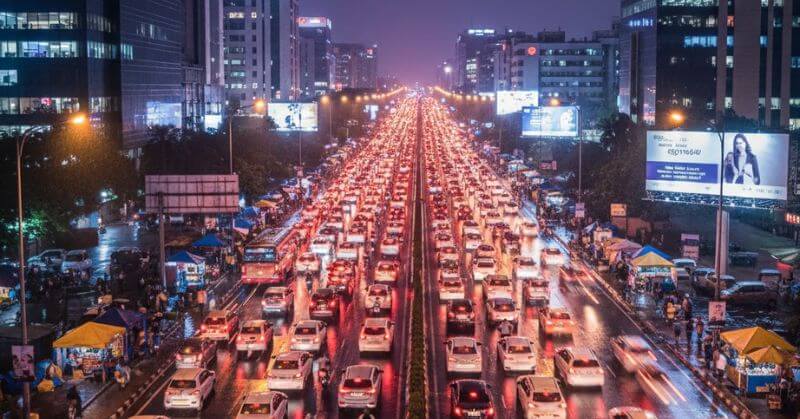
Bengaluru was once celebrated as India’s Silicon Valley. Today, it’s making headlines for a far less enviable reason. The city has officially become the second most congested city in the world, and it isn’t alone. A shocking six Indian cities now feature among the global top 10 for traffic congestion, painting a stark picture of daily life in urban India. Hours lost in traffic jams, rising frustration, and declining productivity have become routine. But how did things reach this point, and what does it mean for the future of Indian cities?
In 2025, a new mobility report brought attention to traffic congestion, a problem that millions of Indians deal with daily. According to the research, drivers in major Indian cities spend hours every day stuck in traffic, losing up to an entire week annually.
The data paints a concerning picture of the ongoing effects of traffic on quality of life, mental health, and productivity in urban India.
The Netherlands-based location technology company TomTom released the TomTom Traffic Index 2025, which contains the congestion statistics. The index measures average speeds, trip times, and traffic congestion across global cities by analyzing real-world driving data.
Why Does Bengaluru’s Traffic Congestion Rank So High?
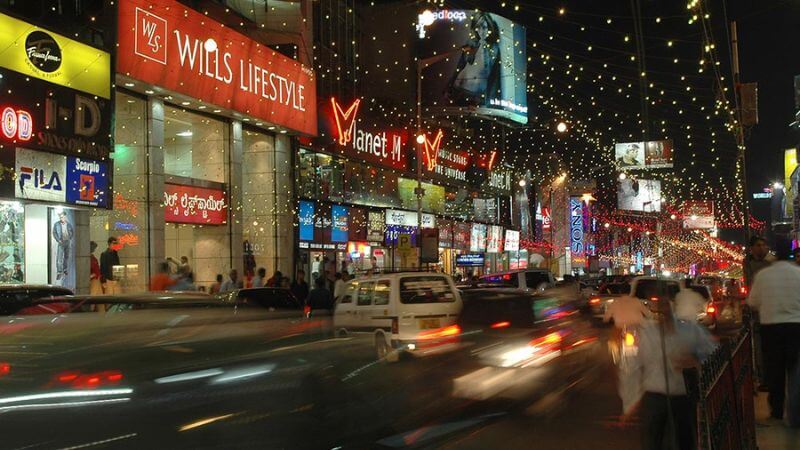
In 2025, Bengaluru was ranked as the world’s second-most congested city. The average driving speed in the city dropped to just 16.6 kmph, and it took drivers 15 minutes to cover 4.2 km. A 10-kilometre commute now takes 36 minutes and 9 seconds, which is more than two minutes longer than in 2024.
Which City Has The Worst Traffic Worldwide?
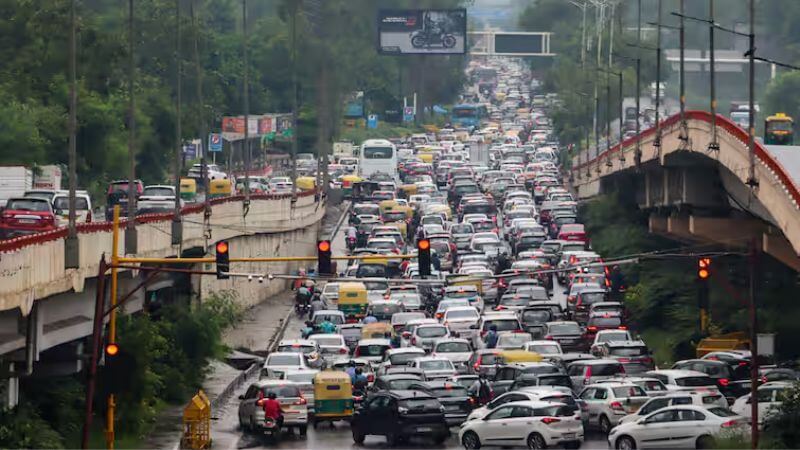
Bengaluru ranked second globally, with Mexico City recording the highest level of congestion worldwide. India dominated the list of the world’s most congested cities. Pune emerged as the second Indian city in the global top 10, ranking fifth worldwide.
Is The Traffic Situation In Mumbai Improving?
Mumbai recorded a 3.3 percentage-point reduction in congestion compared to 2024, indicating early signs of improvement. However, commuters in India’s financial capital still lost 126 hours annually, with average driving speeds hovering around 20.8 kmph.
Traffic congestion in New Delhi rose to 60.2%, up 3.5 percentage points from the previous year. Delhi drivers lost an average of 104 hours per year due to traffic congestion.
Why Does India Have Asia’s Worst Traffic Congestion?
India topped the list of Asia’s most congested cities, with six cities in the continental top 10:
- Bengaluru (1)
- Pune (2)
- Mumbai (6)
- New Delhi (7)
- Kolkata (9)
- Jaipur (10)
Meanwhile, Hyderabad ranked fifteenth, and Chennai placed eleventh in Asia.
How Is The TomTom Traffic Index Calculated?
TomTom uses anonymised GPS data and real driving speeds collected from vehicles worldwide. By analysing trip data covering over 3.65 trillion kilometres, the company evaluates traffic volumes, trip times, and average speeds across cities.
According to TomTom, the index relies on extensive real-world mobility data to fairly compare congestion levels between cities.
What Does This Mean For Indian Commuters?
The findings underline a growing urban crisis. Indian commuters are losing precious hours every day to congestion — time that could otherwise be spent with family, at work, or at rest. As traffic continues to worsen, the report serves as a clear reminder that improving urban mobility is no longer optional for India’s rapidly expanding cities.
Conclusion
India’s traffic crisis is no longer just an inconvenience; it’s a daily drain on productivity, mental well-being, and quality of life. With Bengaluru and several other cities ranking among the world’s most congested, the warning signs are impossible to ignore. If urban planning, public transport, and mobility solutions don’t catch up soon, traffic will continue to choke India’s cities — and the lives of those who live in them.
Follow Us: Facebook | Instagram | X |
Youtube | Pinterest | Google News |
Entertales is on YouTube; click here to subscribe for the latest videos and updates.